
One of the many different things I’ve thoroughly enjoyed in my travels in Europe is, often after visiting certain sites, developing a better understanding of the different practices of the ancients in relation to the same. In some instances, it might be more about mulling over the morsels left behind by certain people.
My “pilgrimage” to the crypt of Bede, just last year, was really to stand before it, in curiosity and awe of the time in which the man lived… on the cusp of faiths in history, as pre-Christian practices were slowly (or violently… it all depends on the people/event/place) brushed aside for Christian practices.
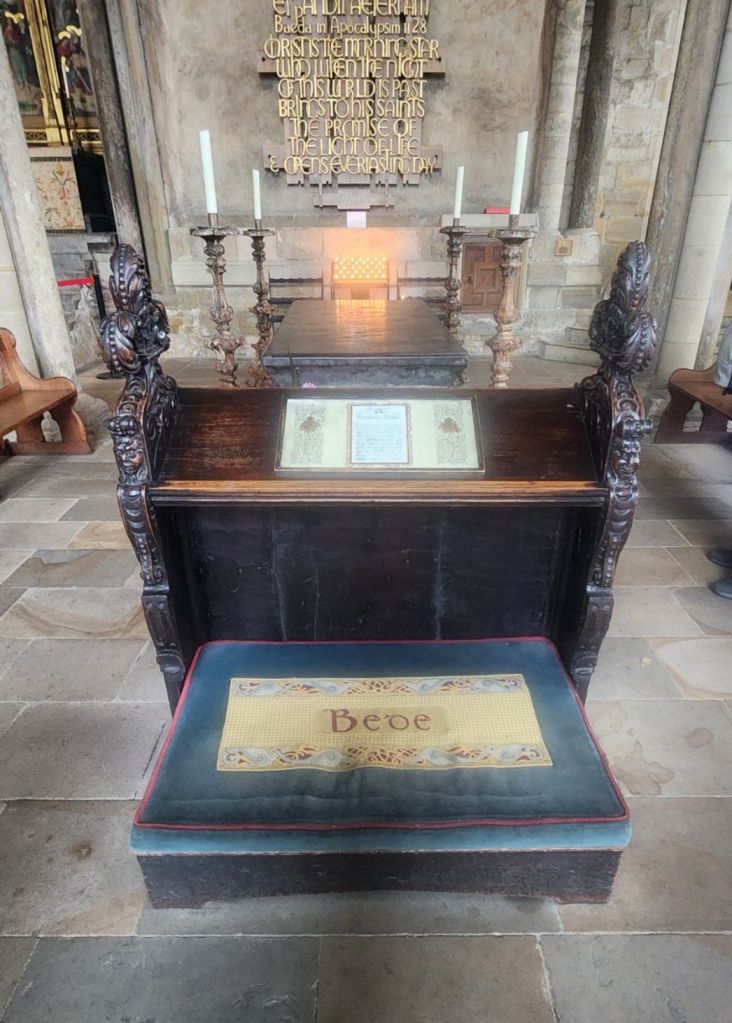
Despite his being a Christian monk, his work as a historian left fragments of the unclear/unknown side of that cusp. But, at least he left something. Even while working to spread Christianity, he made notes of old practices. While they were often quite vague, etymology and mythology gave us just enough to blend together and consider. Take, for example, Mōdraniht. In De temporum ratione, Bede wrote (and, yes, I’m looking to Wikipedia for part of this):
Incipiebant autem annum ab octavo Calendarum Januariarum die, ubi nunc natale Domini celebramus. Et ipsam noctem nunc nobis sacrosanctam, tunc gentili vocabulo Modranicht, id est, matrum noctem appellabant: ob causam et suspicamur ceremoniarum, quas in ea pervigiles agebant
Roughly interpreted:
…began the year on the 8th calends of January [25 December], when we celebrate the birth of the Lord. That very night, which we hold so sacred, they used to call by the heathen word Modranecht, that is, “mother’s night”, because (we suspect) of the ceremonies they enacted all that night.
If curious, I encourage reading more about theories in the link to Mōdraniht in Wikipedia. There are also other resources online, but as a historian, I tend to prefer the sustainable… things that, for example, could hold up in an academic argument.
In the spirit of one of my favorite quotes from Einar Selvik:
I do strongly recommend people to take the travel and start reading books with a little bit of academic starting point, because it’s so easy to climb into trees that don’t have roots.
Theories range from Mōdraniht being tied to a West Germanic sacrificial festival of a Matron’s cult, to the dísir and the norns. So, either way, Germanic at its base, and who’s to say if there wasn’t some bleed over, one way or the other, with similar versions among Celts, Romans, etc.
Ultimately, it’s impossible to do anything with Mōdraniht and claim absolute authenticity. Instead, I think the spirit of the night… the central focus being on the mother ancestors and/or honoring the female spirits or deities… is what matters. To each their own, but looking at the names of women in my family tree… and thinking about the women who are nameless to me, well outside recordable history… that’s moving energy in the right direction.
 The Wild Pretanī