• About

The Wild Pretanī

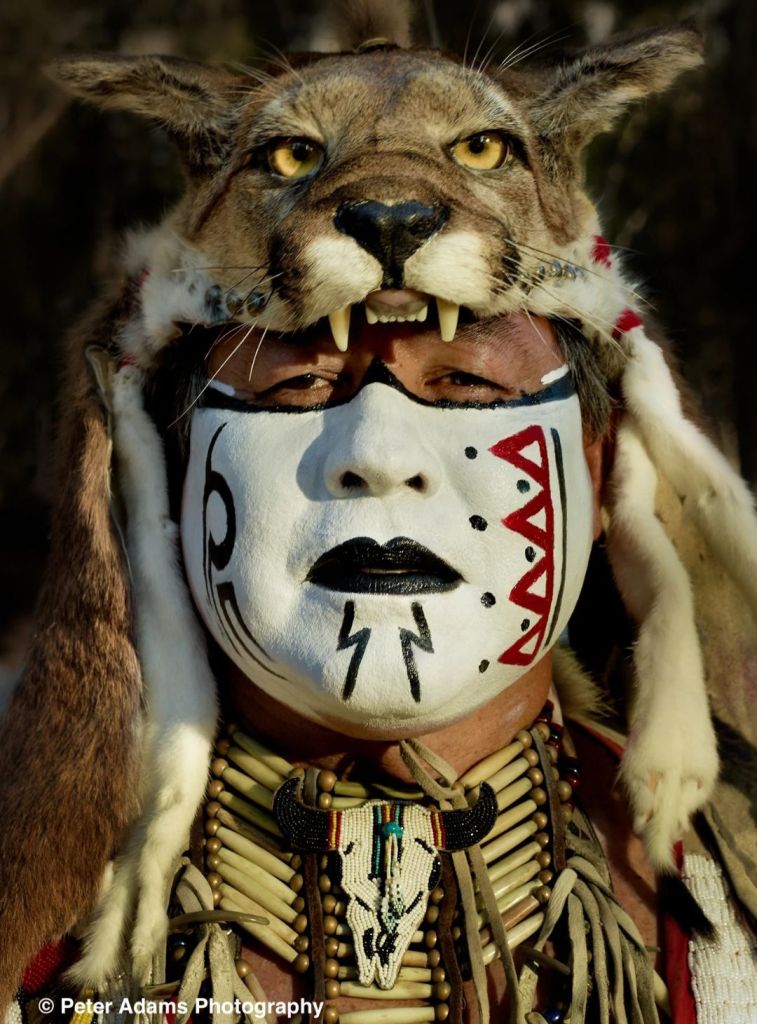
  • “Forsaking” our own spiritual heritage?

    October 25th, 2024
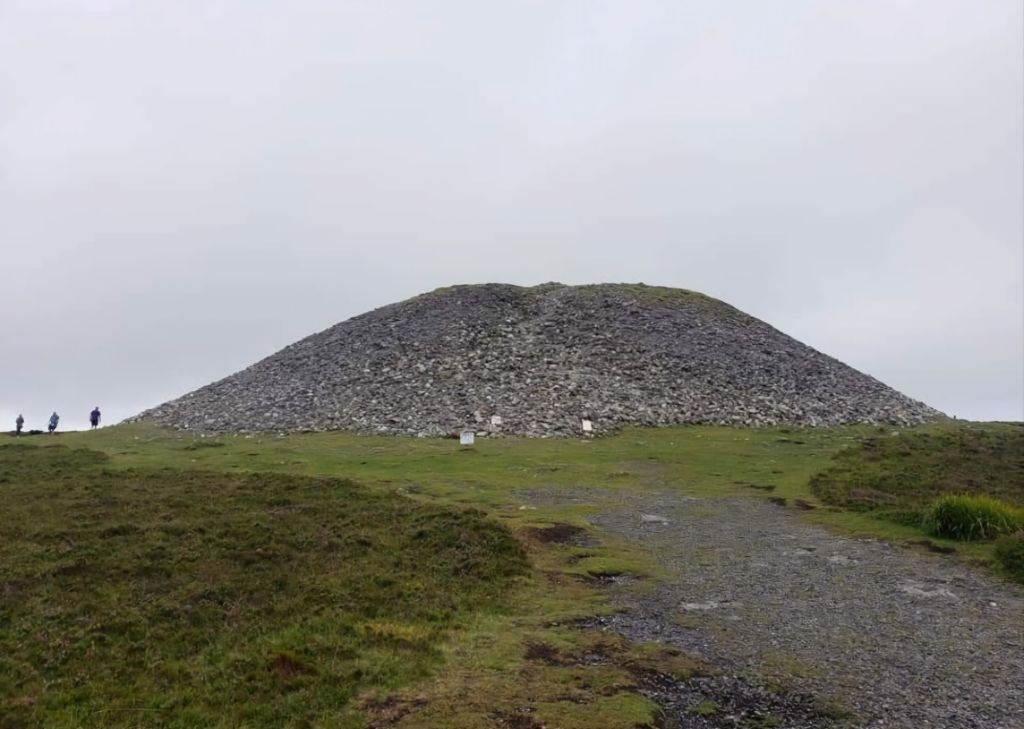
    “Maeve’s Cairn”, July 2019

    Late in July 2021, on my second trip to Ireland, I headed to the northwest to see “Queen Maeve’s Cairn”, Ben Bulbin, and a number of other sites in that area. Already moved by the sites I had taken in two years (including Rathcrogan and Brú na Bóinne) before in Ireland, sometime on the ascent to “Maeve’s Cairn”, there was a personal “hard-stop” moment. Looking over to my daughter, I asked aloud… more or less… why “we” (people of European descent) surrendered this sort of spiritual heritage, connected with our own ancestry, for Christianity. It proved to be a key point in reassessing my thinking.

    Now, “Maeve’s Cairn” (a Neolithic burial mound on Knocknarea/Cnoc na Riabh, in Sligo) is believed to date to around 3000 BCE (perhaps even older… 3500 BCE), and the legend of Maeve (if she actually existed) places her life at around 50 BCE to 50 AD… so, “Maeve’s Cairn” could not actually be, literally, her burial spot. But, I digress from the point.

    The larger realization is that, at around 3500 BCE, the cairn is as old as… if not older… than the pyramids of Giza. Since then, I’ve been to other ancient sites in Europe (and plan to visit more), including (just this year) very similar cairns in Tanum, Sweden. I’ve also expanded my readings to understand more about the history of animistic and totemic practices… paralleling others throughout the world, including those practiced among Indigenous Peoples of North America. I’ve also delved deeply into efforts by contemporary people to reconnect with that form of spirituality… sometimes more conjecture than history, and sometimes actually well-grounded in history… but that’s another discussion in itself. It seems off-putting, then, to see how Christianity pushed aside Europe’s true connections with that spirituality for another faith that evolved nearly 6,000 miles away (distance from Knocknarea to Jerusalem) in an entirely different culture. Further, ignore it as you may, that “push” was anything but peaceful… and it was most certainly done with anything but good, “wholesome” intentions.

    One doesn’t need to look far in regard to the expansion of Christianity in Europe to see how brutal it was (when the expansion was actually recorded). From stories about the British Isles beginning in the 4th century, Charlemagne’s massacre of pagans at Verden in October 782, to the brutal crusade against pagans in the Baltic region through the 13th century (look-up the Northern Crusades), one would think, in retrospect, modern Christianity would be more humble in its approach to other beliefs. Some Christians actually are humble… but given the “bullying” actions of others, from the condemnation of attempts to reconnect to old traditions such as Beltane and Samhain, to the efforts to force the bible on school children in public schools in Oklahoma and the display of the ten commandments in Louisiana (and these instances are but a few of what continues)… Christianity is anything but comfortable without continued expansion.

    Reading about all of this only serves to increase understanding of the larger picture. Consider then why there is any “forbidden fruit”… especially from a “tree of knowledge.”  If partaking means  expanding one’s intellectual self and growing even more spiritually… eat on. Surely, the powers that be would prefer we continue to evolve, and only those who want to suppress and control would prefer otherwise.

    “Forsake not,” then, our own origins and the historical and spiritual lessons we can find in the stories of our ancestors…
  • Rhetoric + intent = energy/”spell-casting”… like it or not…

    October 23rd, 2024
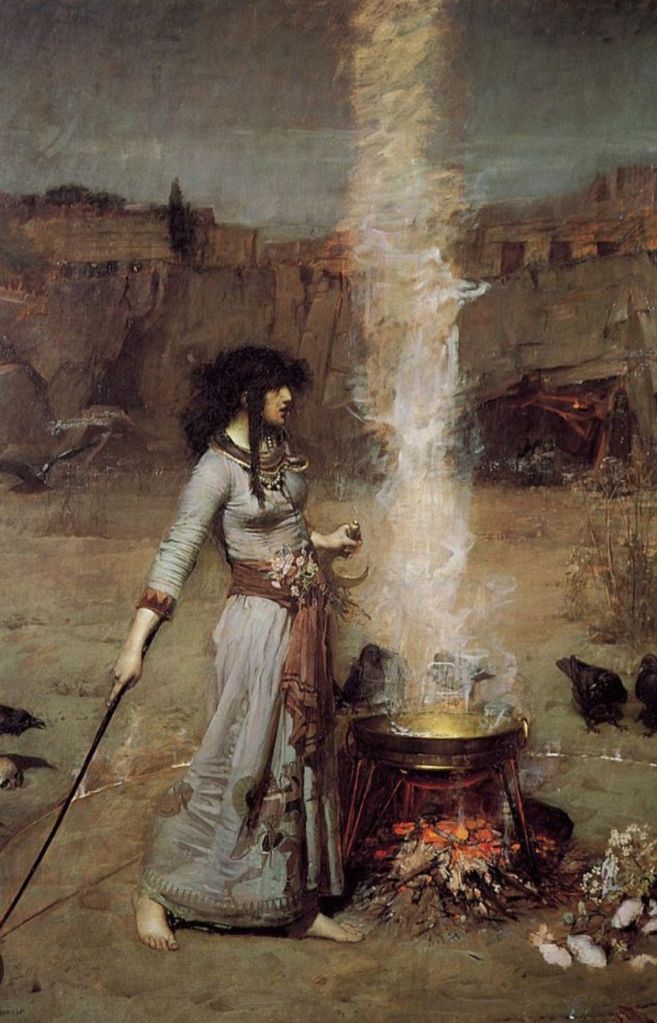
    The Magic Circle, by John William Waterhouse (1886)

    If you engage or attempt to engage another person with either words or actions… the interaction can be embedded with energy expended for a purpose. There’s nothing mystical about it. It’s really quite simple. How many times is energy wielded with intent to influence or change? (especially, it seems, as it’s floated down the rivers of social media… blind-faced, concealed behind a keyboard). It is not limited to spells and incantations but involves the way we ALL live and interact. Therefore, whether you call it prayer or spell… good will… or whatever… what is at the heart of your tools of interaction? Like it or not, is it not a form of “spellcraft”? Are these tools that you use bathed in anger, divisiveness and hate, or… genuine love and caring? Do you hope to change things for the universal good, or only to your own, selfish concepts of what is right and good?

    What can you possibly hope for by wielding negative energy to change or influence another? What, really, is at the core of your “magic”… your rhetoric… and what is the legacy you hope to both grow while you live and leave when you are gone from this world? What allows growth, and what kills it? Should you not care and be more mindful?

    Rambling thoughts for the day…

  • Lessons from Indigenous Peoples’ Day

    October 17th, 2024

    So, this past Monday was Indigenous Peoples’ Day… a day created to recognize Native Americans and to move away from recognizing Columbus Day.

    As to be expected (social media facilitating what amounts to one massive pool of “letters to the editor”), it’s not something that settles well with everyone. There’s a range of arguments against moving away from Columbus, including the argument that European colonization did nothing that wasn’t already being done (pre-Columbian warfare between tribes… even in the name of expansionism and/or migration). Yet, shallow responses such as these reflect shallow thinking (ok, that is snarky of me, but, sorry, not sorry).

    For one, the desire to TAKE land from others to have land for “your own” is something that we all need to think about. Many who have taken DNA tests can see evidence of the practice throughout history. In my own (I’ve tested with five different companies to analyze the consistencies and inconsistencies between companies), I can see evidence of Roman, Brittonic, Anglo-Saxon, and Viking expansion (and a hint of connection to activity in the Baltic region). In the DNA world, that’s a reflection of genetic “admixture”… and it’s a story inevitably tied to human existence. You can’t escape it. It happened in the past, and it’s just going to continue. Yet, perhaps since we’ve had world history in our education, we benefit (well, many of us benefitted from learning world history, and it’s clear from social media comments that many others did not… maybe they slept through it) from being more cognizant than earlier generations (that’s probably worthy of another discussion on another day). In short, could it not be that we can better see the bigger historical picture…  the injustices… and wince? I could go down a few more rabbit holes with this, but that will do for the moment.

    So, let’s say that this is lesson one.

    Going further, as an animist, I’m regularly looking at parallels between Native American beliefs and those of pre-Christian Europe (and other places across the globe). Perhaps what strikes me most is how different cultures across the globe came to strikingly similar spiritual conclusions, yet without traceable  evidence of influence from the others. Now, don’t get me wrong… I’ve also seen how cultures adopted beliefs from other cultures, and they remolded them to better fit their people within a certain geographic area. Ultimately, because this is global, these parallels… especially when so geographically removed from each other… also suggest something that is simply… natural (even if different, strikingly similar). The point is that the stories of the spirituality of Indigenous peoples is a significant key to thinking more broadly. When we see parallels in beliefs across the globe, I argue that we see “alignment” vs. say, “having jumped the track”… natural vs. not so natural.

    I think the meaning of Indigenous Peoples’ Day varies from person to person, but in the back of my head, I keep hearing a quote echoing from Vine Deloria, Jr. (God is Red, 1973)…

    Who will find peace with the lands? The future of humankind lies waiting for those who will come to understand their lives and take up their responsibilities to all living things. Who will listen to the trees, the animals and birds, the voices of the places of the land? As the long forgotten peoples of the respectful continents rise and begin to reclaim their ancient heritage, they will discover the meaning of the lands of their ancestors. That is when the invaders of the North American continent will finally discover that for this land, God is red.

    I see the day as an opportunity for much more profound thinking as to our existence and our connection with everything around us. It depends on how one looks at it, but it doesn’t have to be a day in which we look at a people different than ourselves and just feel sorry for them, for the injustices they experienced. If that’s all you see in the day, I think the value is missed. Think bigger. Take the stories of people, look at how our stories (think deep genetic) are actually aligned with each other, and how the problematic lessons of the past suggest how we might move forward to benefit each other and the planet on which we live. Indigenous Peoples’ Day is a gift to us all… if we listen.

  • Thinking, thinking…

    October 11th, 2024

    My lack of writing since February… it reminds me of the spinning circle on a computer when waiting to transition to the next page. I can come up with a number of excuses, but I have to wonder if, really, it’s just that I didn’t quite know where I wanted this blog to go. It might be that all of that time… a whopping eight months… was necessary to make sense of it all. Given the newness of the blog, thankfully, my audience was more myself than a collection of followers that I left hanging.

    So, really, why did I want to do this blog in the first place?

    Like many writing projects, first, it’s about making sense of something for self.

    Making sense of what, exactly?

    How, after a decade of blogging about a narrow aspect of history (and then a lengthy lull before starting this blog), have I gone to writing about a collection of so many other interests? History remains at the core… genealogy being threaded together with that… followed by my study of DNA… and, eventually, this path propelled me into deeper subject matter… animistic-based spirituality. But it’s not now about spirituality alone, but the collective… history, genealogy, DNA, spirituality (animism being a large part of that) … and more (to include mythology). It doesn’t do justice to say it, but, in an effort to give a synopsis, it’s about exploring history so deeply as to go into pre-Christian beliefs via “blood ancestry” and “non-blood ancestry”. I’d like to get that on “paper” to make sense of it all… for starters, for myself.

    Perhaps the more difficult part of the decision is the second part of “why”… why do I want to blog about it? Why do I want to put such deep, intimate thoughts in a format that opens up to a field of readers? Well, why do most writers write? I believe it’s both to share thoughts and the hope of encouraging others to think about a topic. Yet, in contemporary settings on the web, why would one really open the door to public commentary? I’m quite aware, after having blogged for years, that commentary can be fruitful engagement… and also cruel personal attacks, often simply over a difference of opinion. That is especially cutting when it comes to something so incredibly intimate, such as spirituality and faith.

    Yet, I’ve written for an audience for over 35 years… in published books, articles, and blogs on the web. I’ve also made my rounds in  academic studies… history, writing, and rhetoric. So, I guess writing again is just part of all of that.

    Then, too, I think there’s something else. I “hear the clock ticking”. Mortality. In my 50+ years, I’ve become very aware of how it becomes a struggle to look back upon the life of a person and realize how little you really know. I’d like to think I’m leaving (though the longevity of a blog post on the web is a discussion in itself) another morsel behind… greater than just memory… for my descendants. Sure, to some, I suspect they might not care less, but others… I hope it ignites a spark in them, for their own passion(s)… perhaps some of them… shared.

  • “Indigenous” Europe, and a reference to the Sámi

    February 8th, 2024

    One of the things I truly enjoy dabbling in is comparing stories and situations of indigenous peoples of Europe and North America, especially curious in the shared similarities in animistic and polytheistic religious practices, and how both were treated in the name of  Christianization. Yet, as I dig deeper, becoming aware of the history, I find it increasingly difficult to not sound like I’m “bashing”. I mean, the straight-up history is, quite frankly, brutal and cruel… and it has nothing to do with bias. Essentially, it reveals stories about suppressing indigenous/native forms of religion and “bettering”/”domesticating”/”civilizing” through Christianity. Further, I’ve found that, as some countries have attempted to a spirit of nationalism, there has actually been a resurgence of the “old practices” (indigenous forms of faith). I’ll discuss that at another time. Take all this as you will, as you venture into this post and others on this blog.

    Before I go too much further, however, I find it necessary to discuss the use of the word “indigenous”. I think many, especially in North America, may be hung up on the stereotype of the word. Yet, to be clear… yes, even the main inhabitants (Pretanī) of the Iron Age British Isles were called “indigenous”, though descendants of Neolithic peoples were there first. So, the “indigenous” label is more encompassing than I think most realize… perhaps being tainted by the way in which many view Native Americans. I think there’s an argument to be made for “animistic and polytheistic practicing peoples being in one geographic area for a very long time” actually being “indigenous”. Perhaps, in fact, “indigenous” might be considered a slur, wrongfully judgemental of peoples who “need(ed) civilizing” and being brought up to speed with that which is “right”, especially in the way of religious conversion.

    In that Sámi National Day just passed, on February 6, let’s take a quick look at them and their historic faith practices.

    While most Sámi today belong to the state-run Lutheran churches of Norway, Sweden, and Finland, and some Sámi in Russia belong to the Russian Orthodox Church, indigenous Sámi religion (polytheism) has survived. Like many other indigenous faiths, Sámi beliefs are closely connected to the land, animism, and the supernatural. From Wikipedia: 

    … (Sámi) spirituality is often characterized by pantheism, a strong emphasis on the importance of personal spirituality and its interconnectivity with one’s own daily life, and a deep connection between the natural and spiritual “worlds”. Among other roles, the Noaidi, or Sámi shaman, enables ritual communication with the supernatural through the use of tools such as drums, Joik, Fadno, chants, sacred objects, and fly agaric. Some practices within the Sámi religion include natural sacred sites such as mountains, springs, land formations, Sieidi, as well as human-made ones such as petroglyphs and labyrinths.

    Given the circumstances, it also shouldn’t be too difficult to understand how there’s evidence of synchritism, whereby Sámi beliefs incorporated elements of Norse mythology. Another topic for another time.

    I don’t want to sound like I’m hurrying through and reducing an understanding of things to a few sentences. There is so much more worth reading, and I encourage it. Perhaps then, consider how contact with the spread of Christianity impacted the Sámi.

    Christianity first arrived as early as the 13th century via Roman Catholic missionaries. Over time, the Protestant Reformation also came into play. Not only was the suppression of indigenous faith evident in the burning of rune drums, but adherents to traditional faith were branded “witches”. Again, from Wikipedia:

    In this period, many Sámi practiced their traditional religion at home, while going to church on Sunday. Since the Sámi were considered to possess “witchcraft” powers, they were often accused of sorcery during the 17th century and were the subjects of witchcraft trials and burnings.

    On into the 18th century, the pressure on the Sámi continued…

    … Thomas von Westen, the “Apostle of the Sámi”, (who) burned drums, burned sacred objects, and converted people… Sacred sites were destroyed, such as sieidi (stones in natural or human-built formations), álda and sáivu (sacred hills), springs, caves and other natural formations where offerings were made.

    As I mentioned, even I can’t help but think about the same situation in North America (and various stories of peoples throughout the world). Taking this further, I’m curious how so many have become detached from… though I’d dare say, many wouldn’t dare consider it… being descended from people who were rooted in these “pagan” beliefs. How is it even possible to be judgemental of people, in modern times, who turn to forms of “paganism,” especially when they do so in an effort to reconnect… not only with the faiths of their ancestors, but with nature… and that by doing so, they do it in the spirit of making themselves and the planet on which we live better.

    *Image of Sámi dancing.

  • Diving into the history – facts, fiction, and analysis

    February 5th, 2024

    We utterly forbid that for any reason whatsoever a truce should be made with these tribes, either for the sake of money, or for the sake of tribute, until such time as, by God‘s help, they shall be either converted or wiped out.

    Pope Eugenius III

    If you’re unfamiliar with the quote from Pope Eugenius III, it pertains to his sanctioning the First Baltic Crusade. The image I selected to go along with the quote is Wojciech Gerson’s (1831–1901 CE) work, “The Capture of the Wends, 1147 CE”, which shows the capture of the pagan Wends/ Western Slavs.

    How many are even aware of the First Baltic Crusade, and that this was only part of a larger and longer effort in the “Northern Crusades”?

    I offer this historical morsel, not in an effort to launch a “mission” for the blog… “to bash Christianity” for the methods used in suppressing paganism in Europe… but rather, to begin examining different stories pertaining to the expansion of Christianity throughout Europe… from the time of the Roman Emporer Constantine the Great (306-337) to the fall of the last pagan nation (Lithuania) in Europe in the 15th century.

    With each blog post I write, I’ve been trying to find what I feel I can enthusiastically continue on a regular basis. Having been deep in early American studies for nearly four decades, I approach the history of the Christianization of Europe as a novice, but with a deep curiosity. Even before beginning this blog, I was exploring and discovering stories about which I’ve been completely unaware. So, I’m curious to see what is and is not historically sustainable through valid resources. Further, I’m equally puzzled by stories that have seemingly been suppressed, stories that have been fabricated, and interpreting the “whys” behind both. In this, I feel I’ve finally found the traction I needed to continue this blog.

    Note, however, this will not be a chronological offering of facts. I will jump around. I may find something particularly intriguing about one event, and then, in the next post, jump hundreds of years to discuss another bit of history that caught my attention.

    While I presented this teaser regarding Pope Eugenius III and the Wends, it’s just that. I’m sure, sometime along the way, I’ll discuss this further.

    Let’s see where this goes…

  • Present at the first “sparks” of religion

    January 17th, 2024

    Putting aside all books, imagine… just imagine… the point in time (not in the flash of a second, minute, day, etc., but over a period of time) when primitive humans… thinking logically and without realizing it, noted the “science” of how plantlife was dependent on the elements.

    Take the sun, for example… how they realized how it was critical for the growth of a seed. Then, realizing how they (and many other species) also flourished because of the sun, began showing appreciation for the “gift”, adding it as a central feature in religious practice. Indeed, we don’t know the order in which observations of other things were made (the rain, the moon, etc.), but long before the scientific method was defined, our ancestors realized what sustained and/or impacted life. Energy > action > reaction.

    I think they… and/or the forerunners of the shaman… also felt a need to name these “powers” of nature, subsequently attaching what they perceived as additional “roles” in what impacted man/woman.  Gods and goddesses were born from this human desire to categorize. They did not reveal their names to us, but we gave these important elements and forces of nature, names. We were, in a sense, not only defining them, we were foolishly (or not?) attempting to “capture” who they were.

    Further, in different geographical locations, while all might share a common thread in the knowledge of relying on certain major forces of nature such as the sun, but other roles/responsibilities… some being minor in the pantheon… varied.

    Not only was there a “need” among humans (and others?) to categorize these powers (named gods/goddesses), but it certainly seems logical to think that humans would also seek to interact with them… to seek blessings and favors… to harness pieces of that energy for themselves… for personal benefit.

    Wow… to observe these things as they unfolded… what a fascinating evolution to observe. Even to imagine it… does it not give us clues that would be beneficial to us even today? I said it early on, “rewilding” isn’t to be taken completely literally. It’s not about going back to the way people lived thousands of years ago, in their most primitive conditions. As a species, we’ve gained knowledge over thousands of years, and it would be wasteful to dismiss it all. Yet, have we become detached from some very important fundamentals of survival in our interconnectedness with nature?

    The understanding of the elements and natural forces has changed, but the natural forces still remain. They, too, have changed, and we are always looking to see how they have changed and how they continue to impact us. As much as science has taught us, like nature, science also “shifts” over time (with new understanding through more advanced scientific research). We are still trying to understand. Therefore, the enigma remains, and, like it or not… named gods and goddesses or not… “they”… in the multifaceted reality of nature… are still very much here and alive in everything we do today.

    There is a saying (and I’m pretty sure I first heard it from Einar Selvik, of Wardruna), and it’s worth considering… “They never left; we left them.”

    *Photo taken Aug. ’23, in the mountains of Vestfold, Norway.

  • Wielding the potential of analogy… the “Pair Dadeni”

    January 13th, 2024

    …for I will give unto thee a cauldron, the property of which is, that if one of thy men be slain to-day, and be cast therein, to-morrow he will be as well as ever he was at the best, except that he will not regain his speech.

    It’s a pity The Mabinogion (which, if you weren’t already aware of, is a work of Welsh mythology… which was written in a language rooted in Brythonic… which takes us back, again, to the Pretanī) isn’t more widely read and considered a resource for imagination in youth… perhaps as a focal point for introspection, and critical for grasping the concepts of analogy, metaphor, and symbolism in early creative writing. Perhaps also for finding something personal in daily living.

    In preparing my cast iron kettle this morning… filling it with water, fruit, herbs, and certain roots, my intent was for fragrance to permeat a few of my rooms. But, considering everything involved, is it actually more significant than just satisfying the olfactory? Maybe it isn’t; but perhaps it could be.

    Obviously, I don’t just toss a bunch of stuff into a pot on the stove, and it suddenly gives off fragrance.

    After I wake on cold winter mornings and plan on being home most of the day, I start a fire in my fireplace before moving on to the wood stove in another portion of the house. The two wood fires typically do pretty well in giving a balance of heat in the house. Yet, the location of the wood stove is different. It holds more meaning. For one, it is in one of the rooms to which I occasionally like to retreat to read. With three sides of the room fitted with picture windows, it also offers an opportunity for me to just sit and enjoy the living, breathing outside, but not be chilled to the bone in doing so. So, it is in a spot in which I recharge, in one way or another.

    On the wood stove sits a cast iron kettle. Not just any cast iron kettle, but one which I remember from my youth, being at my grandparents’ house. It passed later to my mom, and then to me So, it holds a special power for me, in that it is a focal point for reminiscing.

    I spend my time carefully loading the wood stove, knowing exactly what works and what doesn’t, in order to get a good fire going (and, hopefully, not to fill the room with smoke as it starts). Once I’m done with that, I reach for the kettle. Not only with the intent of adding ingredients to generate a wonderful scent, but as a source to keep moisture in the air as the room warms.

    Taking the kettle to the kitchen, I add the water, turn to my spices, refrigerator, and freezer for a combination of ingredients that I find… regenerating and warm. It depends on what’s available, and if I want to put everything in, or just a portion… but my base go-to items include thin-sliced Orange or Lemon, cranberries, cloves, cinnamon sticks, carefully shredded Ginger root, perhaps a sprig of rosemary or lemon balm from my garden, or a sprig of evergreen from a tree in the yard. All are selected for the reward of scent, but I now wonder if, perhaps subconsciously, I’ve selected these things for health, as well as their properties and meaning.

    In essence, have I not, in a way, created in this space, in this kettle, with these ingredients, my own Pair Dadeni? It does not bring me back from the dead, but in the energy of the space, from the fire, to the kettle, to the ingredients, to the health properties, meaning, and the very fragrance it yields, have I not wielded a number of things to reinvigorate myself and the space in which I move in the morning, and possibly, through a good part of the day? In a way, have I not symbolically resurrected myself through the gifts of the cauldron to go about my day with such positive energy as I interact with others?

    Believe it or not, this is the first time I’ve given this much thought to that chain of events, and now, having laid it all out in print, certainly I will never go through the process again without thinking about it in this way.

    “Magic”… or at least the potential for it… is everywhere…

  • Why not just “The Wild Celt”?

    January 12th, 2024

    When writing, I try (or that may be naturally ingrained in me by now) to anticipate responses/criticisms from the reader. I think it’s also a means of preserving the assembly of words I’ve laid out in print. I mean, if you’re going to put something out there for public consumption, you want to anticipate reader thinking in order to create a more stable… more self-sustaining structure, right? You need to think in terms of your not being around to look after it all once you’ve launched it into the abyss. At least you hope it will hold up… for a while. There’s sooo much to say about this, but, for now, let’s put this in the context of today’s post title.

    First, the Pretanī were, in fact, Celts/Celtic. However, how many people know Celts(?) vs. how many know Pretanī? Are you quite sure you know who Celts were, and how much of that “knowledge” is actually made up of stereotypes? Celts weren’t a bloodline but rather a culture, and it’s much larger than the stereotype of being exclusive to Ireland. At least, those are the first two stereotypes to cast aside. I know I just opened the door on further discussion of Celts and stereotypes, but that’s not my point. Instead, let’s close this door and move on to the next.

    It’s more efficient, therefore, to go with Pretanī, as it funnels readers away from most stereotypes. It might also force readers to think more… perhaps even perform a little research independently. I never gave a thought to using anything “Celt” in the title because I knew all the baggage that would carry. To me, the decision on the subclass of the Pretanī is also more personal to me.

    Anyway, who were the Pretanī aka Pritanī)?

    It’s believed the word might mean “painted ones” or “tattooed folk”. Culturally Celtic, per Y DNA, they were labeled over a decade or two back (by the now defunct BritainsDNA program) as falling under haplogroup R-L21. This particular haplogroup is believed to have emerged ca. 2600 BCE, probably/seemingly on mainland Europe. That said, nearly a dozen different archeological finds (bones) suggests subclades/branches of R-L21 may have been in “Britain” (from Somerset and Wiltshire, as far north as Northumberland and Fermanagh) as early as 2800 BCE. The problem is that age-dating of these oldest bones vary, placing “presence” between 2800 and 1800 BCE. If we take these ten samples and give an average of the oldest/youngest date range given all ten (not very scientific, but…), this has R-L21 in Britain as early as 2511 BCE, and as late as 2018 BCE. Archeology and bones aside, it takes quite some time before we see them get a “shout out” by another culture. In fact, it wasn’t until the 1st Century BCE before anyone referred to the place. Per Wikipedia:

    The earliest written reference to the British Isles derives from the works of the Greek explorer Pytheas of Massalia; later Greek writers such as Diodorus of Sicily and Strabo who quote Pytheas’ use of variants such as Πρεττανική (Prettanikē), “The Britannic [land, island]”, and nēsoi brettaniai, “Britannic islands.

    Others, such as Ptolemy (who never set foot on the Isles, but documented tribal names) and the Romans (who were up close and personal) give us even more clarity (right, wrong, biased, indifferent, and as murky as may be) into the 1st Century AD.

    Further, it would seem that the name of the people may have been used by outsiders to describe them, and maybe not used to describe themselves. Though this might be debatable given variants of the word “Briton” were, in fact, used to describe themselves in later years.

    While I believe the descendants (most?) of R-L21 were right in the thick of things among the Brythonic-speaking people, like the concept of the Celts, I think other Y DNA lines, in the same place, and tribally grouped, referred to themselves as Pretanī/Britons. I also believe that, for various reasons, branches/subclades of R-L21 lines could be found in other geographic areas (I may get into this in another post at another time).

    Understand, I really don’t mean to oversimplify all the history and science in between, but hope to provide just enough to give context to a key element behind my “path of discovery” throughout this blog. I think at this point, I’ve provided just enough foundation to apply the next layer.

    Why have I decided to reach this far into the past to begin searching for something relevant to living today?

    Again, not to oversimplify, but, in that there are those of us who understand that all life is interconnected, and that our existence is dependent on our respect and harmonious relationship with the earth and all the elements (and have a respect for ancestral “guidance”… in whatever form that might be), then why not take a closer look at people such as the Pretanī, who appear to have their faith based in this very thing? Does this really mean something along the lines of Celtic Reconstructionism? Not necessarily. I see it as looking to the deep ancestral past for answers applicable to living today. That also entails acknowledging that we have had scientific advances worthy of consideration in that application of that which we find of value. As I’ve said, this isn’t reverting to living in the past, but by seeking value from the past in thoughtful living today. I’ll quote Vine Deloria, Jr. once again:

    Who will find peace with the lands? The future of humankind lies waiting for those who will come to understand their lives and take up their responsibilities to all living things. Who will listen to the trees, the animals and birds, the voices of the places of the land? As the long forgotten peoples of the respective continents rise and begin to reclaim their ancient heritage, they will discover the meaning of the lands of their ancestors.

    Is this type of thing for everyone? Absolutely not. To each their own.

    This is a reflection of my curiosity, and if even a small part of it resonates within a reader or several readers, and they enjoy my assembly of words, and my willingness to be transparent enough to make it available, then I’m good with that. Maybe it will even be enough for someone to use this as a template for their own path of personal discovery.

    *Photo of yours truly, at the Cliffs of Moher, County Clare, Ireland, 2021.

  • Take 2… The Wild Pretanī

    January 11th, 2024

    It’s funny how the void of darkness… the absence of stimuli made available because of light… opens doors to creative thinking. That’s often what I find myself thinking over and over again on morning commutes… and it played on my thinking again this morning.

    That being said, this is the third consecutive day of uploading a blog post; something I haven’t done in years. I’m still… as sailors say… getting my sea legs back, but I’m also finding that the “clothes” don’t quite fit. In other words, I’m finding I’m restricting myself too much with the framework under which I opened this blog. I want room to write in any direction I want… whatever way the wind happens to be blowing for me on any particular day. As such, I’m changing both the title and subtitle of the blog. It is now…

    “The Wild Pretanī: An eclectic, chaotic good, Animist (pagan), traveler, satisfying my alter ego through writing.”

    I think the new title and subtitle are mostly self-explanatory, but to be clear, I can be all over the board (chaotic), about a range of topics (eclectic); I am a traveler frequenting Europe annually; and, yes, I am an active follower/reader/practitioner of earth-based spirituality/religion. While I use the term “pagan”, I sometimes don’t like it very much as 1) it’s too broadly defined (essentially, any non-Abrahamic religion); and 2) well, on one hand, as used by Abrahamic religion it’s used as an insult; yet on the other, to use it by someone who is a practitioner of an earth-based religion, I find it to be a sweet form of rebellious pushback (redundant? Meh, I’ll stick with it anyway) against those who use it as an insult.

    There, I’ve said it without beating around the bush.

    Lastly, I’ve been a writer of historical topics for many years, absolutely love hypertext theory and writing for the web, and… am very aware of how age is creeping up on me and dulling the edge on my writings. As much as transparency and self-awareness in writing fascinate me, they also yield painful realities. Nonetheless, here I am, writing despite it.

    As for jumping from “Rewilding the Pretanī” to the “Wild Pretanī”… well, frankly, I’ve been rewilding for enough years, so, here I am… let’s just go with “wild”. Further, as you can see, at least I’ve retained the “Pretanī” part. I’m still deeply fascinated by the story of them and my genetic connections to them… from the Bronze Age, into the Iron Age and (with the story of an even wider range of Brythonic-speaking people) beyond. So, we’re talking about everything from Celtic mythology to the Hen Ogledd and Gododdin and the Welsh Triads. But, even saying that, I’m not ruling out discussing my love for my pre-Christian Scandinavian and Anglo-Saxon connections. Like I said… no restrictions.

    Oh yes… again, about that traveler part… not only do I travel to Europe annually, I specifically visit pre-Christian Pretanī, Anglo-Saxon, and Scandinavian sites, and… try to attend at least one major event rooted in the “old ways” (so far, the Beltane Fire Festival in Edinburgh, Midgardsblot in Borre, Norway; and, the Samhuinn Fire Festival in Edinburgh).

    Music… how could I possibly forget that? As mentioned, I’ve been to the Midgardsblot music festival, but, in the States, I’ve attended Heilung and Wardruna concerts/rituals.

    So, let’s “Take 2”, and get things rolling…

    * Photo of me, standing in the middle of the Rosa dos Ventos, in Coruña, Spain, 2022. I’ll tell the story of that beautiful spot in another post.

←Previous Page
1 2 3
Next Page→

Blog at WordPress.com.


Loading Comments...
 

    • Subscribe Subscribed
      • The Wild Pretanī
      • Already have a WordPress.com account? Log in now.
      • The Wild Pretanī
      • Subscribe Subscribed
      • Sign up
      • Log in
      • Report this content
      • View site in Reader
      • Manage subscriptions
      • Collapse this bar